
Terrapene carolina
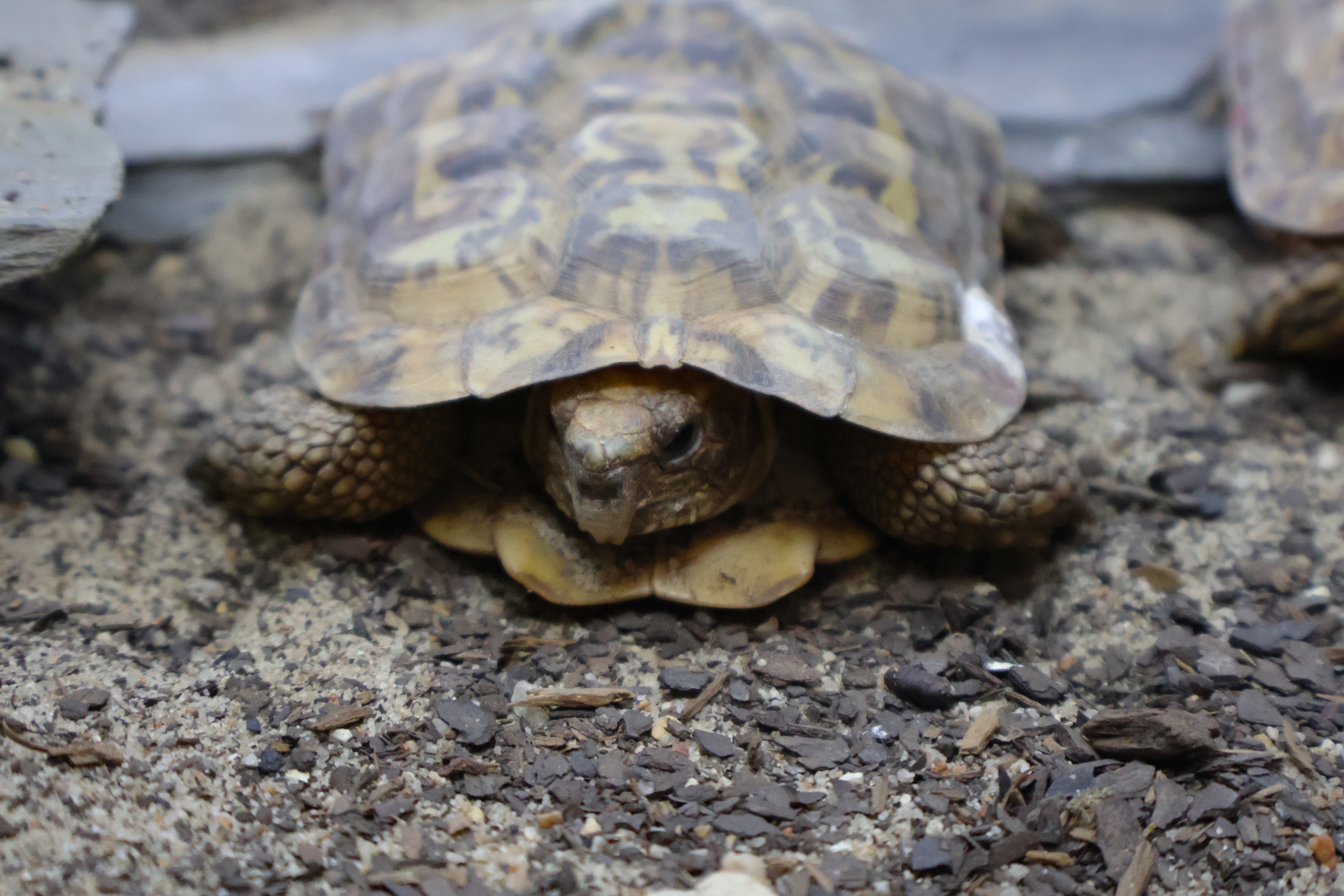
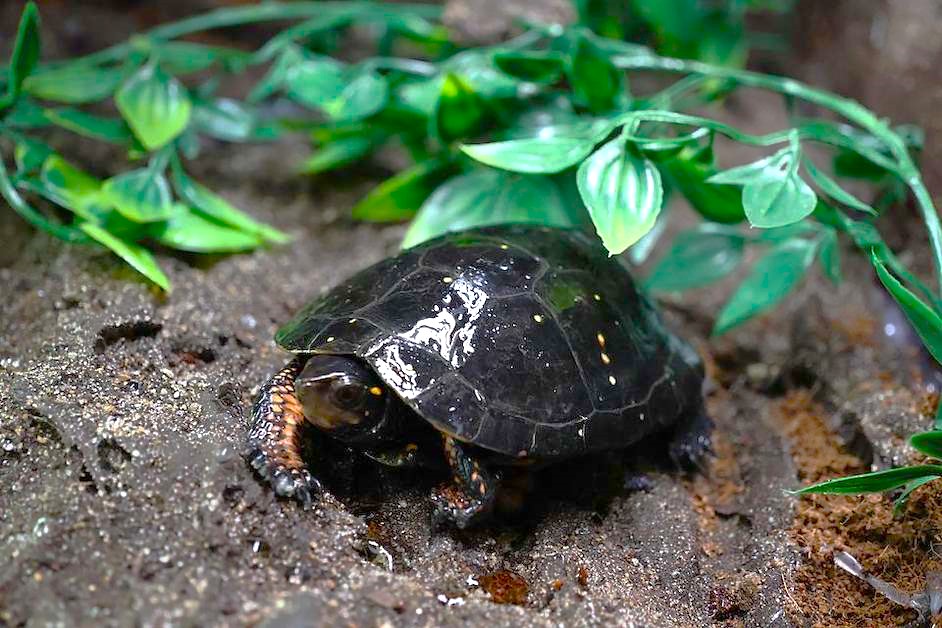
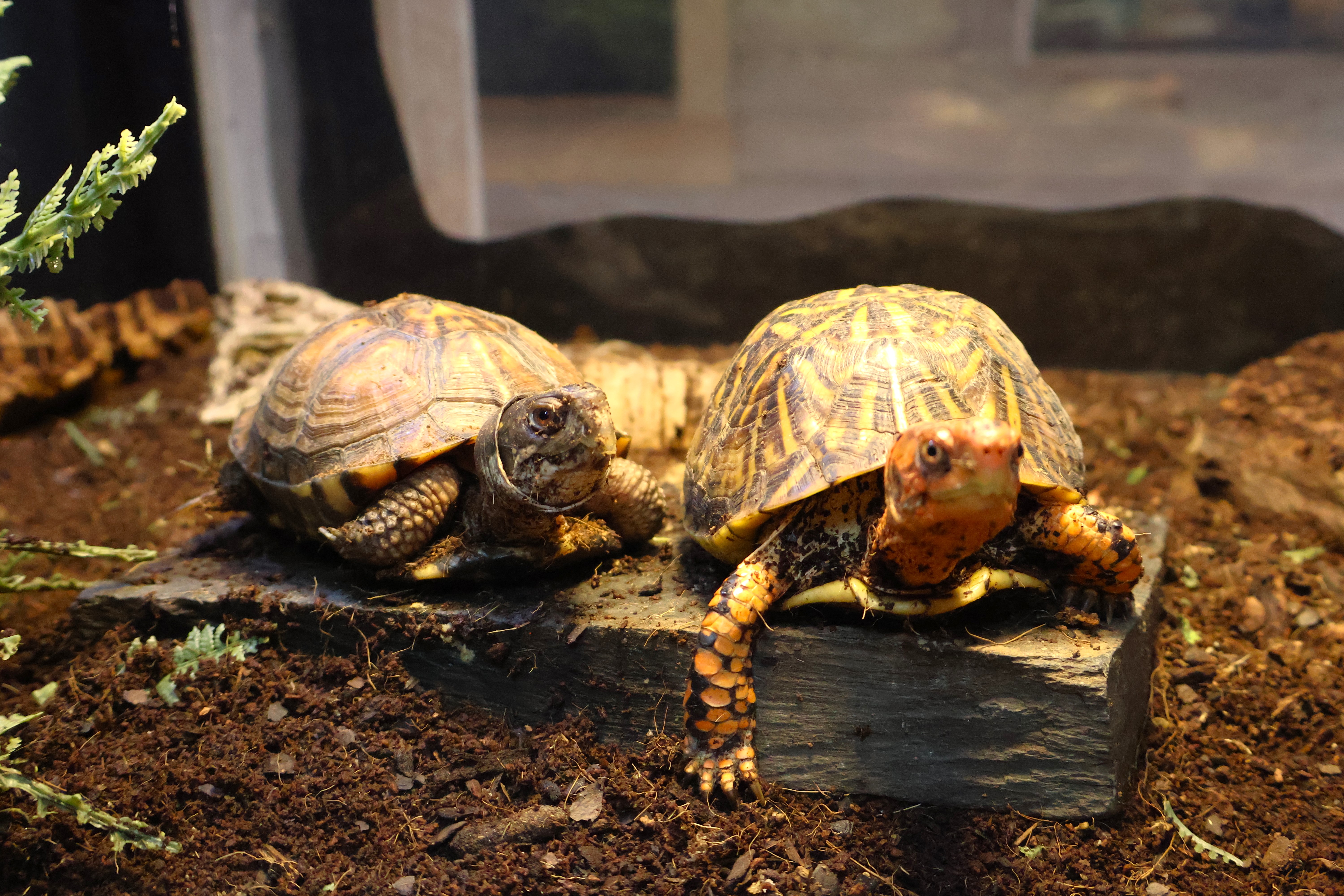
The eastern box turtle is a small to medium-sized terrestrial turtle native to forests, fields, and wetlands across the eastern United States. Named for its hinged shell that allows it to close completely like a “box” for protection, this turtle is known for its colorful, domed shell marked with yellow, orange, or brown patterns. Eastern box turtles are primarily omnivores, feeding on insects, worms, berries, mushrooms, and plants.
According to the International Union for Conservation of Nature (IUCN), the eastern box turtle is listed as Vulnerable. Populations have declined due to habitat loss, road mortality, collection for the pet trade, and predation by non-native animals. Because eastern box turtles are long-lived but slow to reproduce, even small threats can have long-term impacts on their populations. Conservation efforts focus on habitat protection, public education, and minimizing road-related mortality.
Eastern box turtles help maintain healthy ecosystems by controlling insect populations and aiding in seed dispersal through their diet. Their presence also indicates a healthy, functioning forest or field ecosystem.
Did you know?
Their hinged plastron allows them to completely enclose themselves when threatened.
They eat insects, worms, berries, fungi, and plants.
They can live 50 years or more in the wild.
They move slowly, which makes road crossings dangerous.
They thrive in moist forests but can also be found near wetlands and streams.
Male box turtles will have bright colors, like orange, while females will be mostly darker colors.
They are considered turtles, and not tortoises, because of their diet. Tortoises are herbivores and turtles are omnivores.