

Centrochelys sulcata
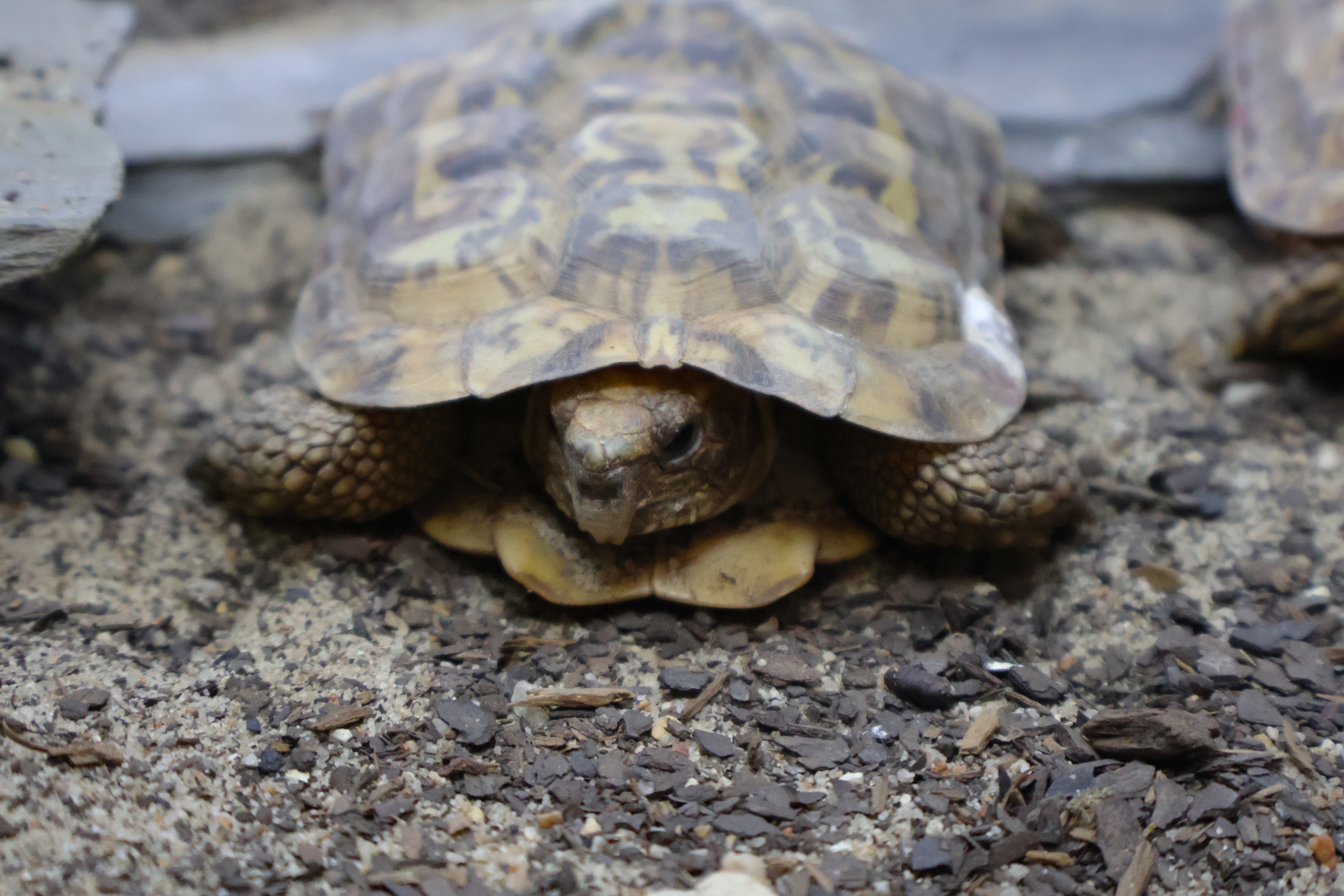
The African spurred tortoise, also known as the sulcata tortoise, is the largest mainland tortoise in the world. Native to the southern edge of the Sahara Desert in Africa, these tortoises are well adapted to hot, arid environments. Their thick, scaly legs are covered with protective spurs, and their massive shells provide shelter from predators and extreme temperatures.
According to the International Union for Conservation of Nature (IUCN), the African spurred tortoise is listed as Vulnerable. Populations are declining due to overgrazing, habitat destruction, and collection for the pet trade. Because they require large territories for foraging and burrowing, loss of natural habitat poses a serious threat. Conservation efforts focus on habitat protection, captive breeding, and community education to reduce human impact.
As herbivores, African spurred tortoises help shape their ecosystems by grazing on grasses and other vegetation, which can promote plant diversity and prevent overgrowth. Their burrows also provide shelter for other animals in the harsh desert environment.
Did you know?
They are perfectly adapted to survive in hot, dry environments with limited water.
Their deep burrows help them escape extreme heat and provide homes for other desert creatures.
They primarily eat grasses, succulents, and other vegetation.
African spurred tortoises can live 50–100 years in captivity and often longer in the wild.
Their strong, spurred legs help dig burrows and navigate sandy terrain.