
Heloderma horridum
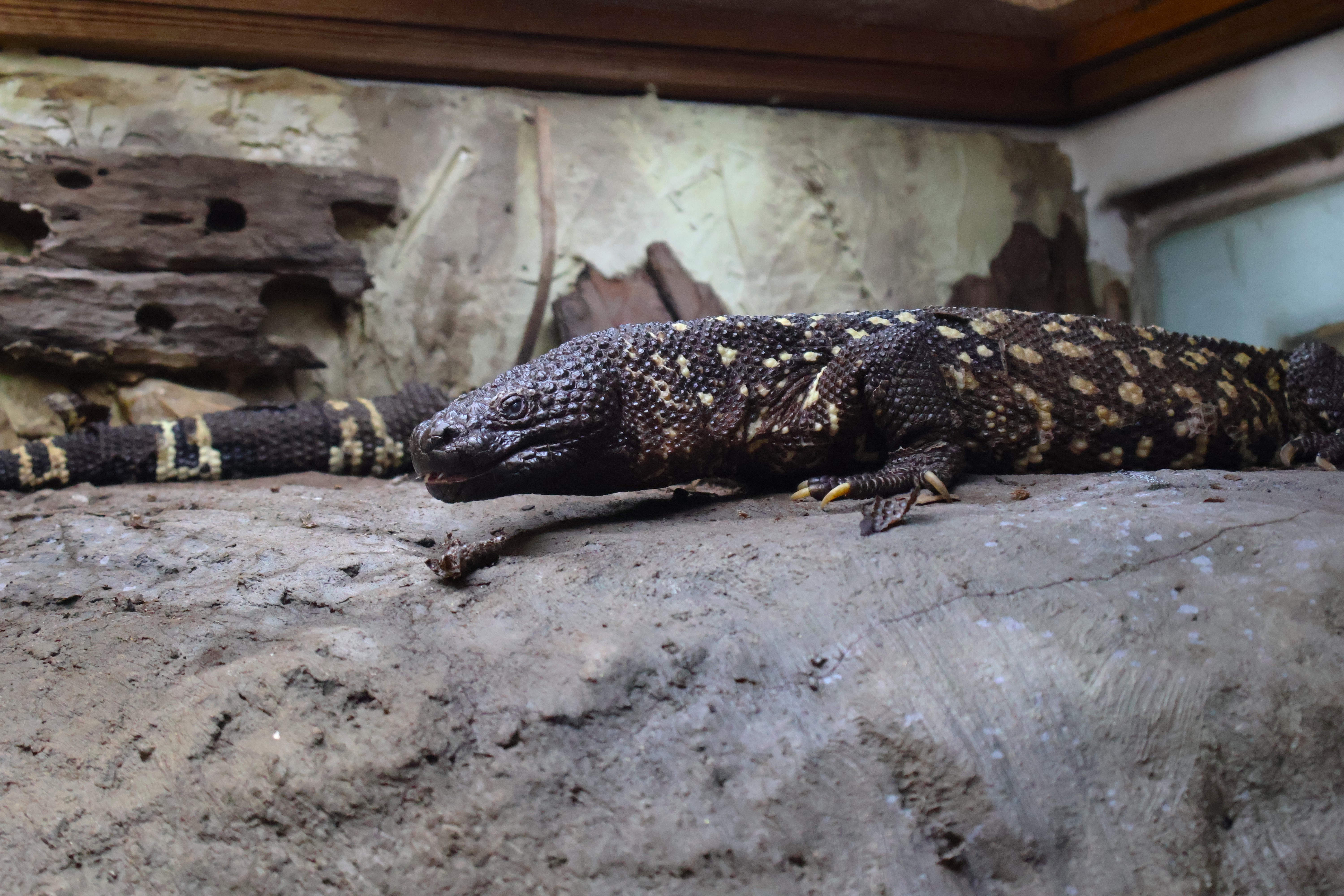
The Mexican beaded lizard is a large, slow-moving, and venomous lizard native to dry forests and rocky scrublands in Mexico and parts of Guatemala. Its body is covered in bead-like scales that give the species its name, and its stout, club-like tail stores fat for survival in arid environments. Despite its fearsome appearance, this lizard is generally shy and relies on its camouflage and slow movements to avoid detection.
According to the International Union for Conservation of Nature (IUCN), the Mexican beaded lizard is listed as Vulnerable. Populations have declined due to habitat loss, fragmentation, and illegal collection for the pet trade. These lizards require specific rocky and forested habitats, and disturbances to these areas can have serious consequences for local populations. Conservation efforts focus on habitat protection, public education, and regulated breeding programs to ensure their survival.
As top predators of small mammals, birds, eggs, and insects, Mexican beaded lizards help control populations of prey species, contributing to balanced ecosystems. They also serve as ambassadors for venomous reptiles, helping educate people about the importance of coexistence and the ecological role of species often misunderstood or feared.
Did you know?
Their scales are bead-like and bony, providing protection against predators.
They produce a mild venom used to subdue prey, delivered through grooved teeth.
They store fat in their tails to survive periods of food scarcity.
They rely on camouflage and patience rather than speed to avoid threats.
Unlike many lizards, Mexican beaded lizards give birth to live young.
Scientists use their venom in diabetes medication.