
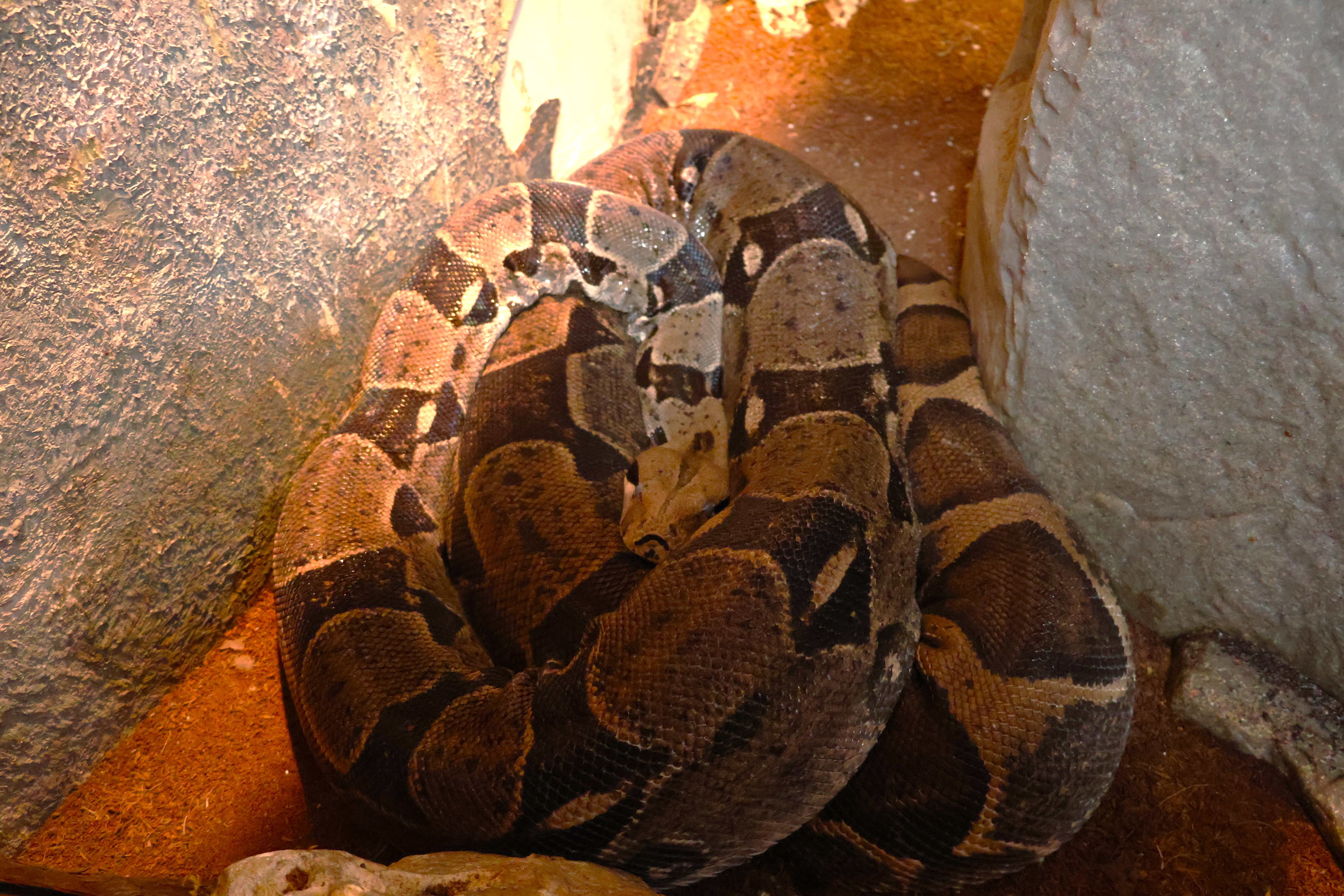
Boa constrictor
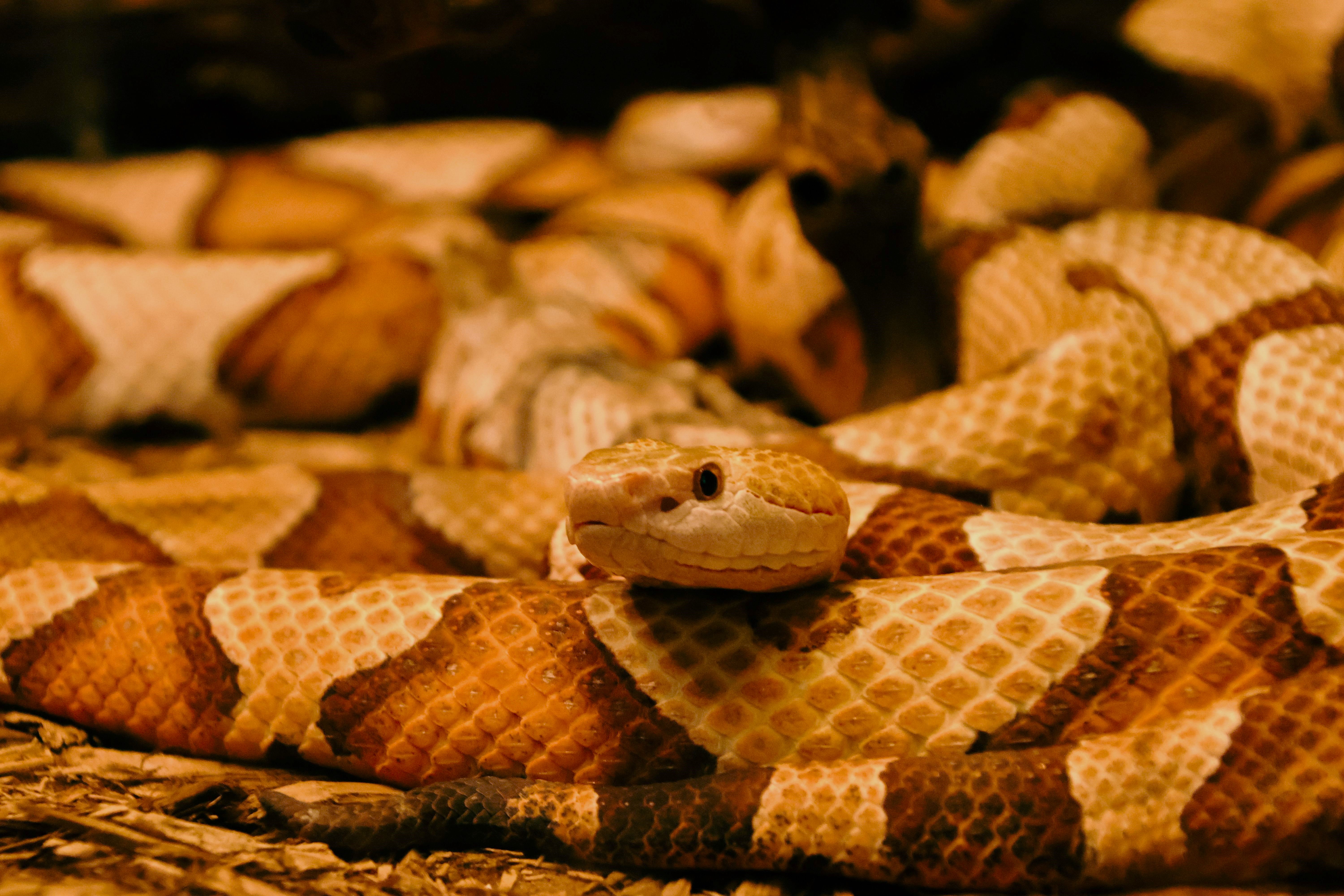
The boa constrictor is a large, nonvenomous snake native to parts of Central and South America. Found in tropical rainforests, dry forests, and savannas, these powerful snakes are known for their muscular bodies and beautiful patterned scales. Their coloration often includes tan, brown, and reddish markings that help them blend into leaf litter and forest floors. Despite their intimidating size, boas are generally slow-moving and rely on camouflage and patience rather than speed.
According to the International Union for Conservation of Nature (IUCN), the boa constrictor is listed as Least Concern overall. However, some local populations are affected by habitat destruction and collection for the pet trade. Boas are also protected under international trade agreements, such as Convention on International Trade in Endangered Species of Wild Fauna and Flora (CITES), which helps regulate and monitor their export to ensure wild populations are not overharvested. Conservation efforts focus on habitat protection and responsible, legal breeding practices.
Boa constrictors are important mid-level predators. They help regulate populations of rodents, birds, and other small mammals, contributing to balanced tropical ecosystems. As ambush predators, they play a quiet but essential role in maintaining biodiversity. Their presence signals a healthy habitat with sufficient prey and shelter.
Did you know?
They wrap around prey and gently tighten with each exhale until the prey can no longer circulate blood effectively.
Many boas are most active at night.
They have heat-sensitive scales around their mouths to detect warm-blooded prey.
Unlike many snakes, boas give birth to live young instead of laying eggs.
They are capable swimmers and sometimes hunt near water.