
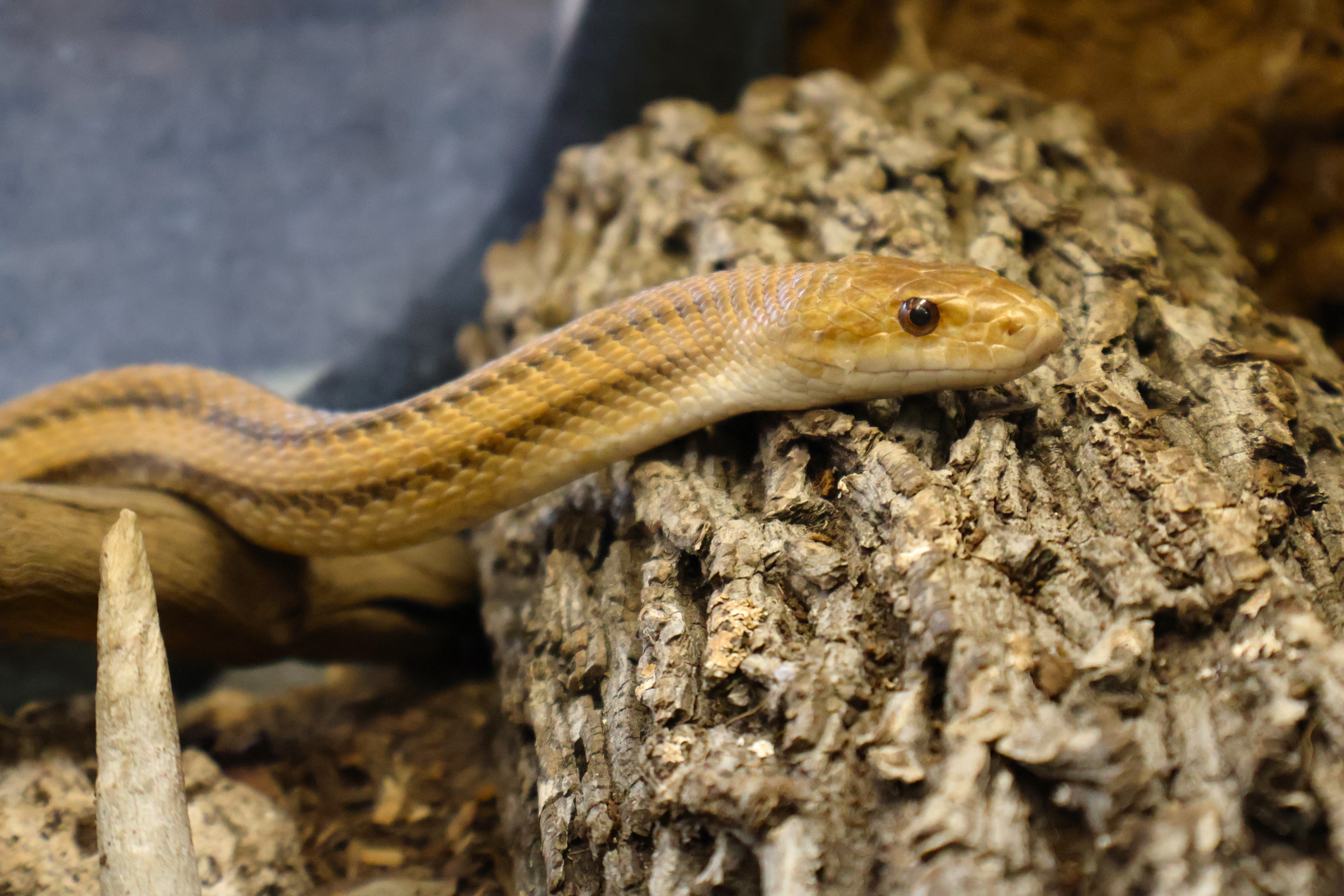
Pantherophis obsoletus
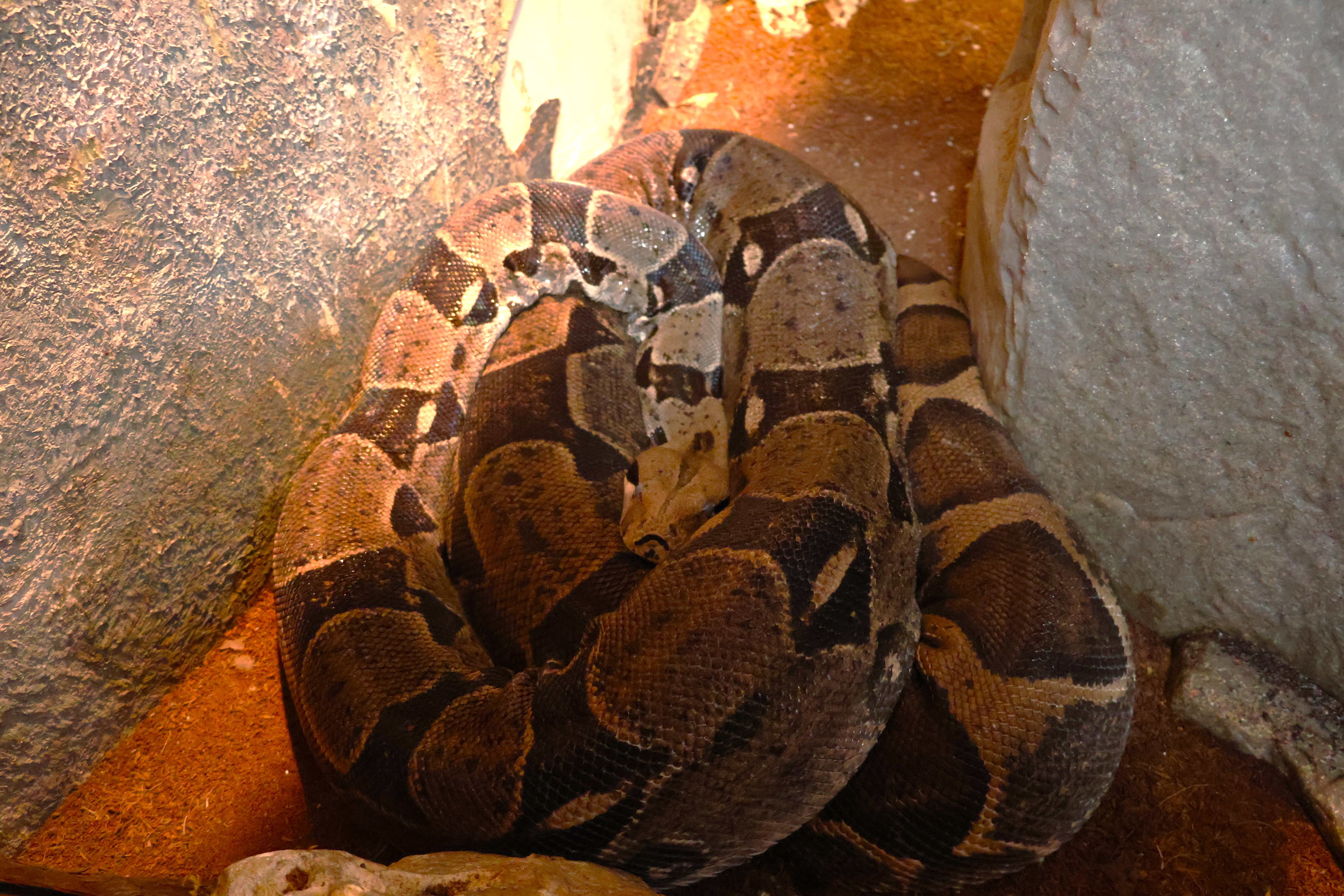
The western ratsnake is a large, nonvenomous snake native to the central United States. These adaptable reptiles can be found in forests, grasslands, rocky hillsides, and even barns and agricultural areas. Their coloration varies by region but often includes dark blotches on a lighter background when young, turning darker as they mature. Excellent climbers, western ratsnakes are often seen scaling trees in search of bird eggs or shelter.
According to the International Union for Conservation of Nature (IUCN), the western ratsnake is listed as Least Concern due to its wide distribution and stable population. However, like many snake species, they face threats from habitat loss, road mortality, and persecution due to fear or mistaken identity. Because they are frequently confused with venomous species, education plays an important role in protecting them. Healthy habitats and public awareness help ensure this beneficial species continues to thrive.
Western ratsnakes are important rodent controllers. By feeding on rats, mice, and other small mammals, they help reduce agricultural pests and limit the spread of diseases carried by rodents. As both predator and prey, they contribute to balanced ecosystems in forests, farms, and grasslands. Their presence is often a sign of a healthy, functioning habitat.
Did you know?
They are strong climbers and may even enter barns or attics while hunting rodents.
When threatened, they may vibrate their tails in dry leaves to mimic a rattlesnake.
They are skilled at locating and swallowing bird eggs whole.
Like all reptiles, they rely on external heat and often bask to regulate body temperature.
Western ratsnakes are harmless to humans and rely on constriction to subdue prey.