
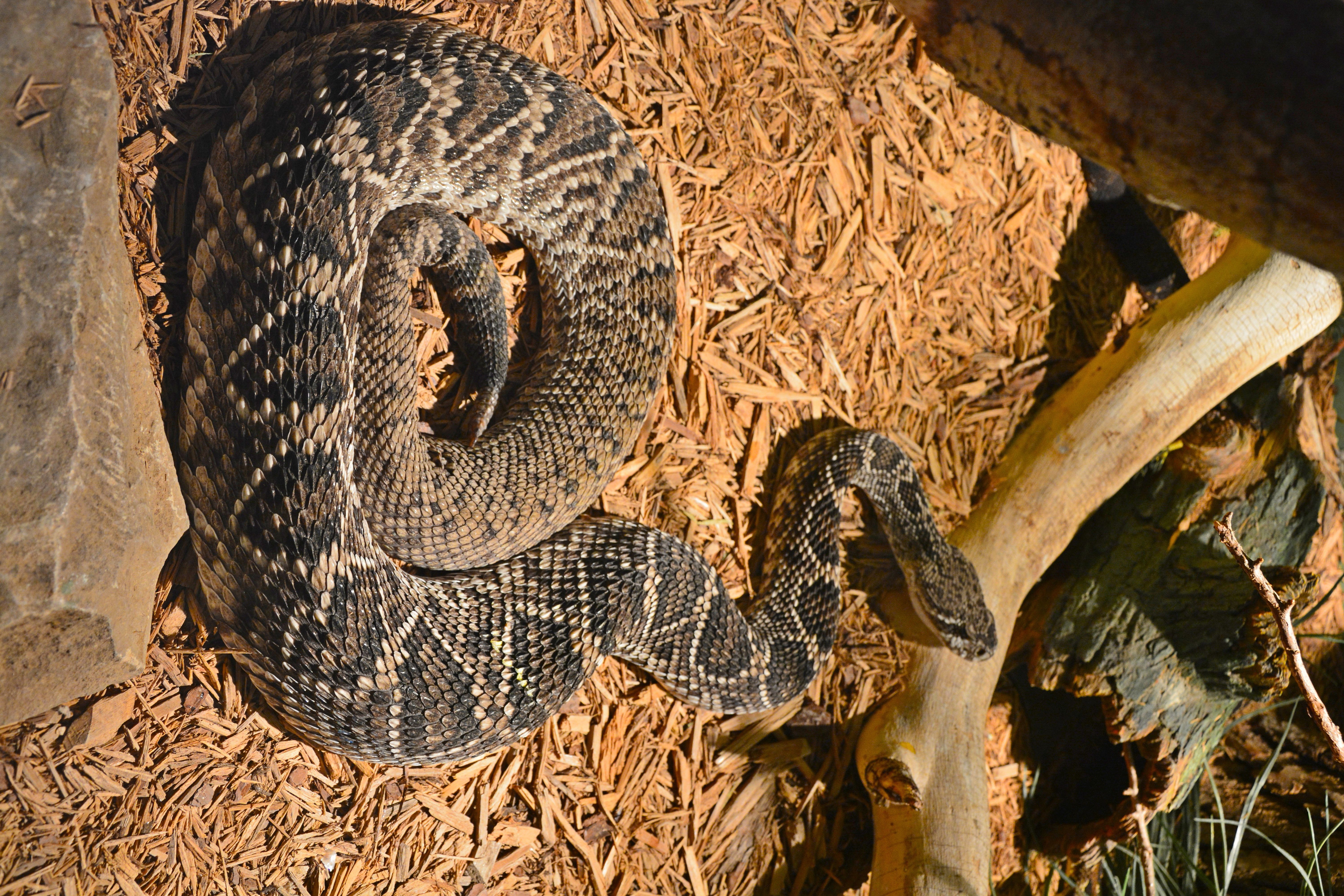
Crotalus adamanteus
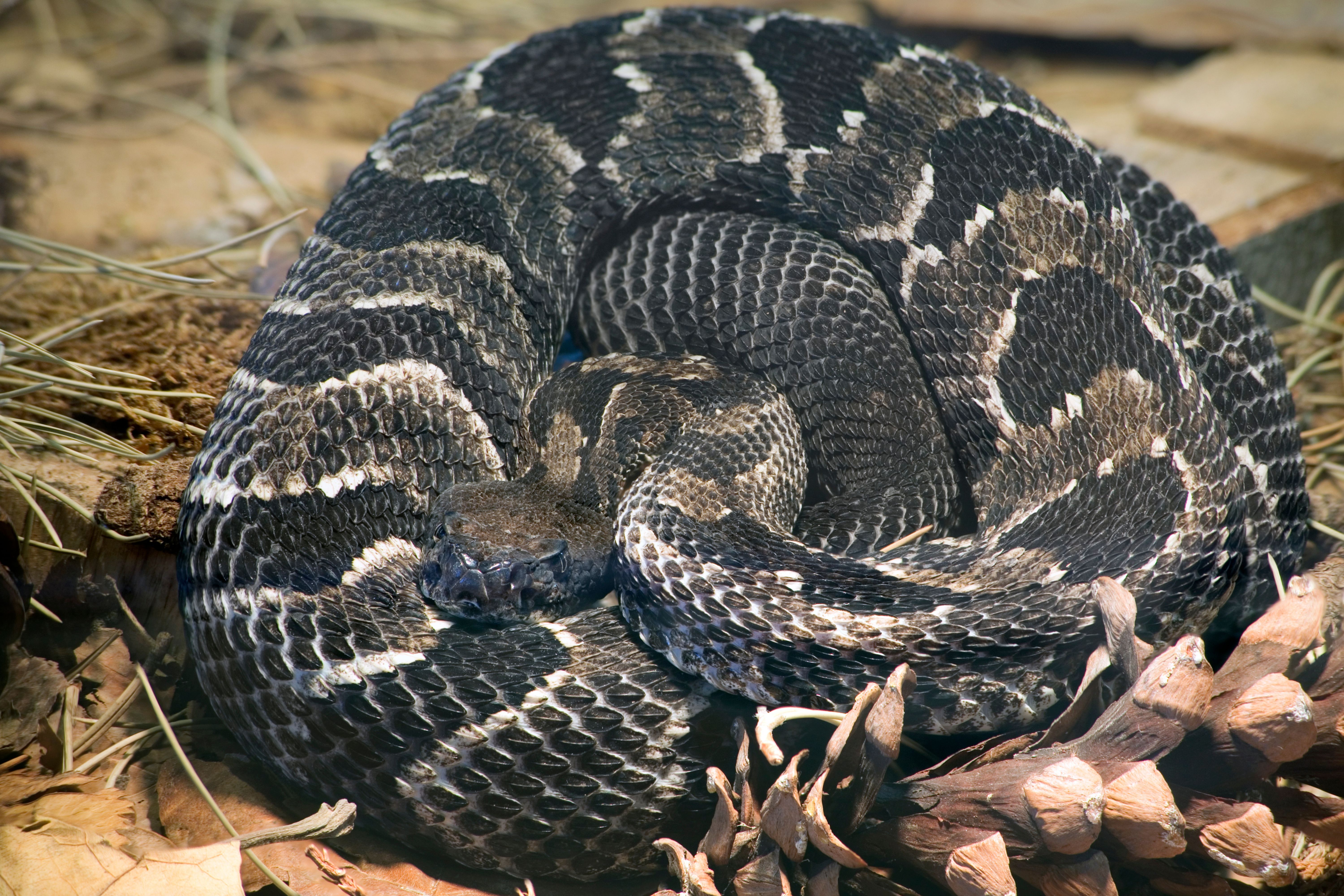
The eastern diamondback rattlesnake is the largest venomous snake in North America. Named for the bold, diamond-shaped patterns running down its back, this impressive reptile can grow up to 8 feet long. It is native to the southeastern United States, particularly coastal plains and longleaf pine ecosystems in states like Georgia and Florida. Eastern diamondbacks prefer dry, sandy habitats such as pine forests, scrublands, and coastal dunes.
According to the International Union for Conservation of Nature (IUCN), the eastern diamondback rattlesnake is currently listed as Vulnerable. Populations have declined due to habitat loss, development, road mortality, and historic persecution. Longleaf pine ecosystems, one of their primary habitats, have been significantly reduced from their historic range. Because eastern diamondbacks mature slowly and reproduce infrequently, population recovery can take time. Protecting and restoring longleaf pine habitats, along with promoting education about snake safety and coexistence, are key conservation strategies for this species.
As apex predators in their ecosystems, eastern diamondbacks help regulate populations of rodents and other small mammals. This balance supports healthy forests and reduces agricultural pest issues. They are also considered an indicator species for the health of southeastern pine ecosystems. When we protect eastern diamondbacks, we protect the diverse wildlife communities that share their habitat.
Did you know?
Their rattle serves as a warning to avoid conflict, helping both snakes and people stay safe.
Like other pit vipers, they have heat-sensing pits that help them locate warm-blooded prey.
Females give birth to live young rather than laying eggs.
They often use abandoned burrows dug by gopher tortoises for shelter.
Their diamond pattern helps them blend into leaf litter and sandy ground.