
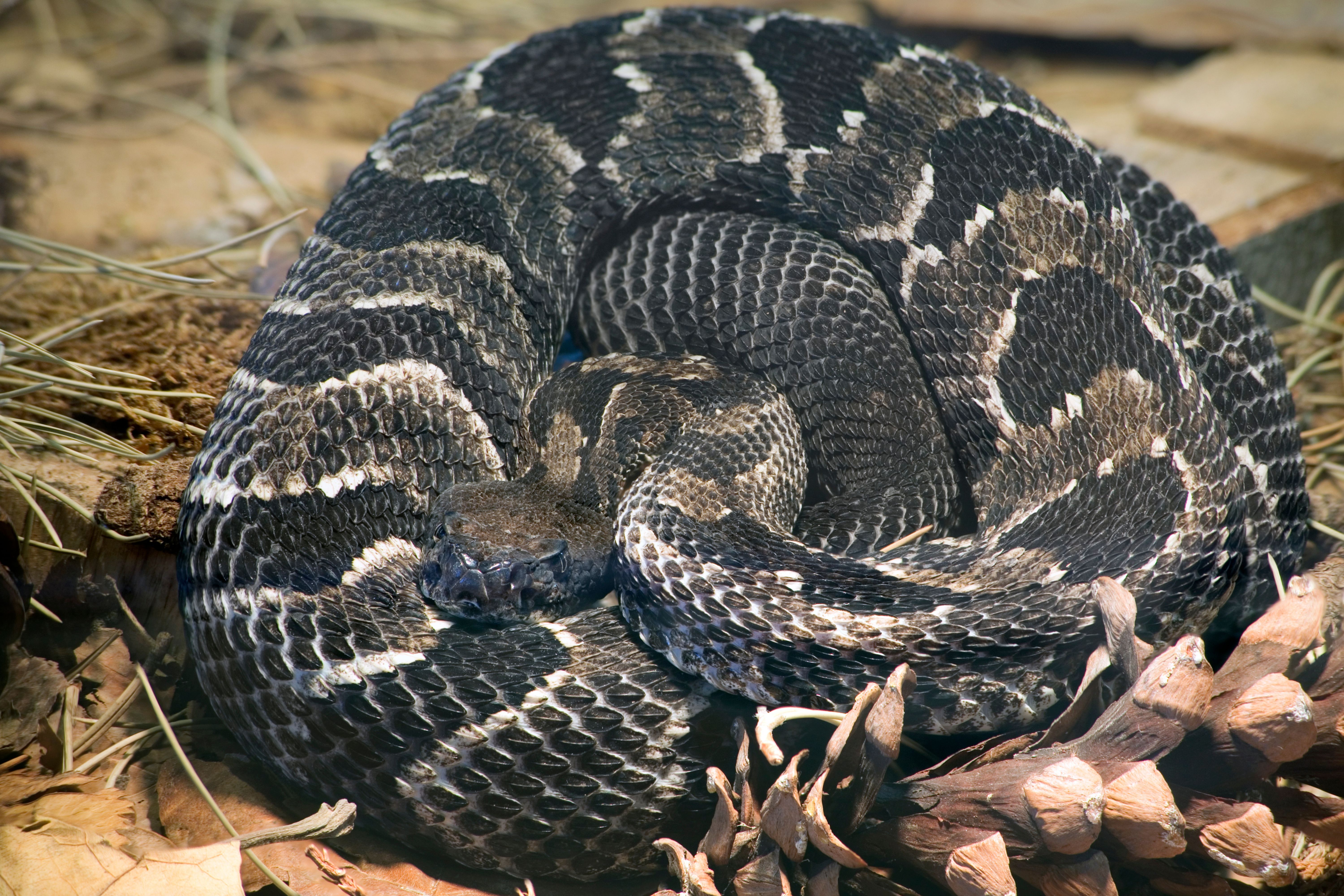
Crotalus horridus
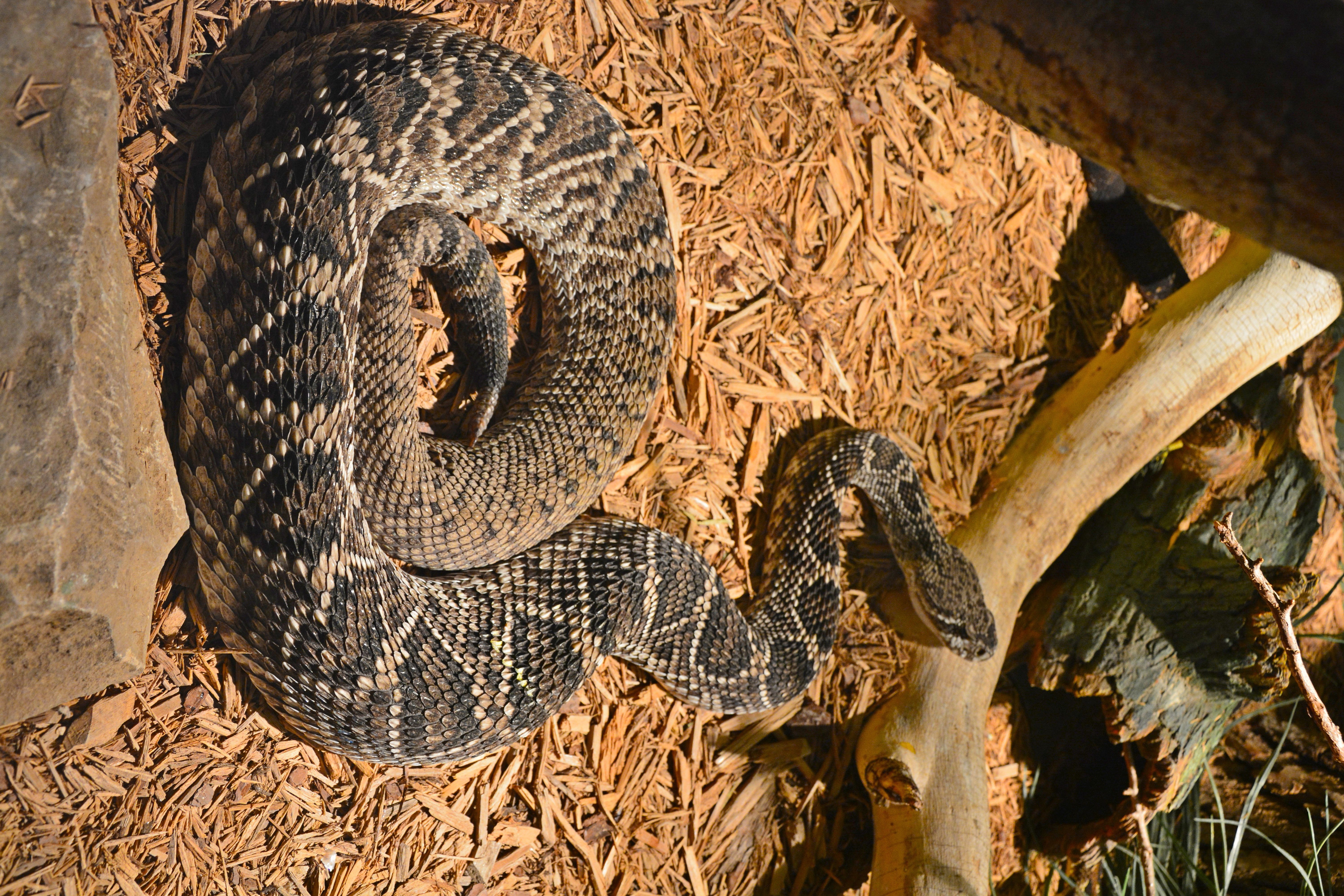
The timber rattlesnake is a large, venomous pit viper native to the eastern United States. They are also known as Canebreak Rattlesnakes. Recognizable by its heavy body, triangular head, dark crossbands, and signature rattle at the tip of its tail, this species inhabits forests, rocky hillsides, and woodland edges. Timber rattlesnakes rely on camouflage to blend into leaf litter and forest floors, often remaining still to avoid detection.
According to the International Union for Conservation of Nature (IUCN), the timber rattlesnake is listed as Least Concern globally. However, populations have declined in parts of their range due to habitat loss, road mortality, and historic persecution. Because they reproduce slowly, females may only give birth every 3–5 years, timber rattlesnakes are especially vulnerable to population declines. In several states, they are protected by law to prevent unnecessary killing and to support population stability. Protecting forest habitats and educating the public about snake safety and coexistence are key to their long-term survival.
Timber rattlesnakes play an important role as predators in forest ecosystems. They help control rodent populations, which can reduce crop damage and limit the spread of certain diseases carried by small mammals. As both predator and prey, they are an essential part of the food web. Healthy snake populations are a sign of balanced ecosystems.
Did you know?
Their rattle is made of keratin segments that grow each time they shed. It serves as a warning, not an attack signal.
As pit vipers, they have heat-sensing pits that help them detect warm-blooded prey.
They often bask on sunny rocks to regulate body temperature.
Timber rattlesnakes give birth to live young rather than laying eggs.
In colder regions, they hibernate communally in rocky dens.