
Clemmys guttata
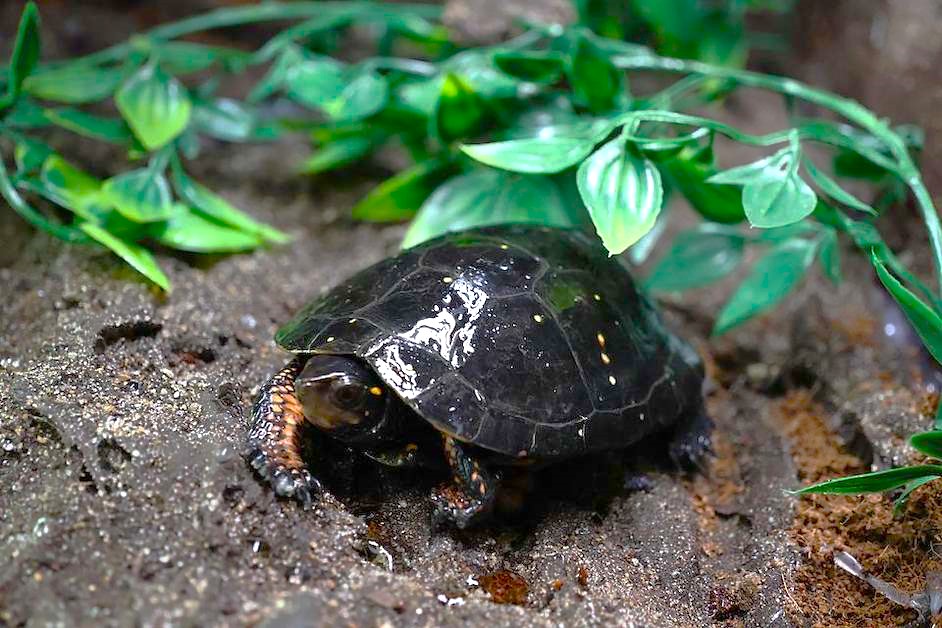
The spotted turtle is one of North America's smallest and most recognizable turtles. Native to the eastern United States and southeastern Canada, these turtles are easily identified by the bright yellow spots scattered across their smooth, black shells. Spotted turtles live in shallow wetlands such as marshes, bogs, wet meadows, and woodland pools, where they spend their days searching for food and basking in the sun.
According to the International Union for Conservation of Nature (IUCN), the spotted turtle is listed as Vulnerable. Populations have declined due to wetland destruction, habitat fragmentation, road mortality, and collection for the illegal pet trade. Because spotted turtles mature slowly and produce relatively few young, populations can take decades to recover from losses. Wetland drainage and development continue to reduce the specialized habitats these turtles depend on.
Spotted turtles are an important part of wetland ecosystems. As omnivores, they feed on insects, worms, snails, small crustaceans, and aquatic plants, helping maintain healthy food webs. They are also considered an indicator species, meaning their presence reflects the health of wetland habitats. Protecting spotted turtles means protecting wetlands, ecosystems that provide clean water, reduce flooding, and support countless species of plants and animals.
Did you know?
No two spotted turtles have the exact same pattern of yellow spots.
Adults are only about 3½–5 inches long, making them one of North America's smallest turtles.
They spend hours basking on logs and vegetation to warm up and regulate their body temperature.
Spotted turtles often stay within a very small home range for most of their lives.
Because of their popularity in the pet trade, removing spotted turtles from the wild is illegal in many places and can have lasting impacts on local populations.